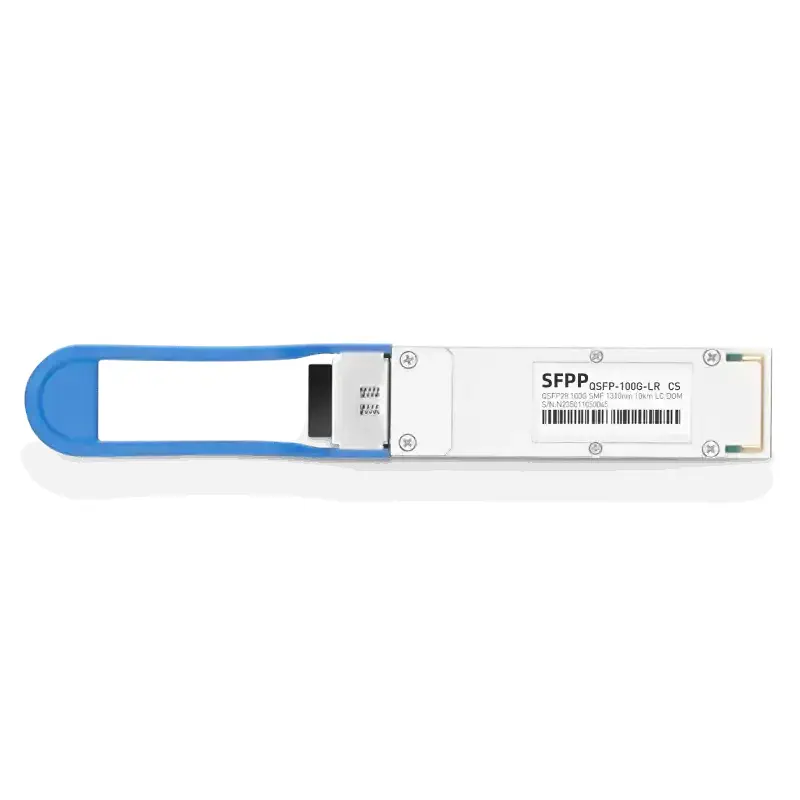
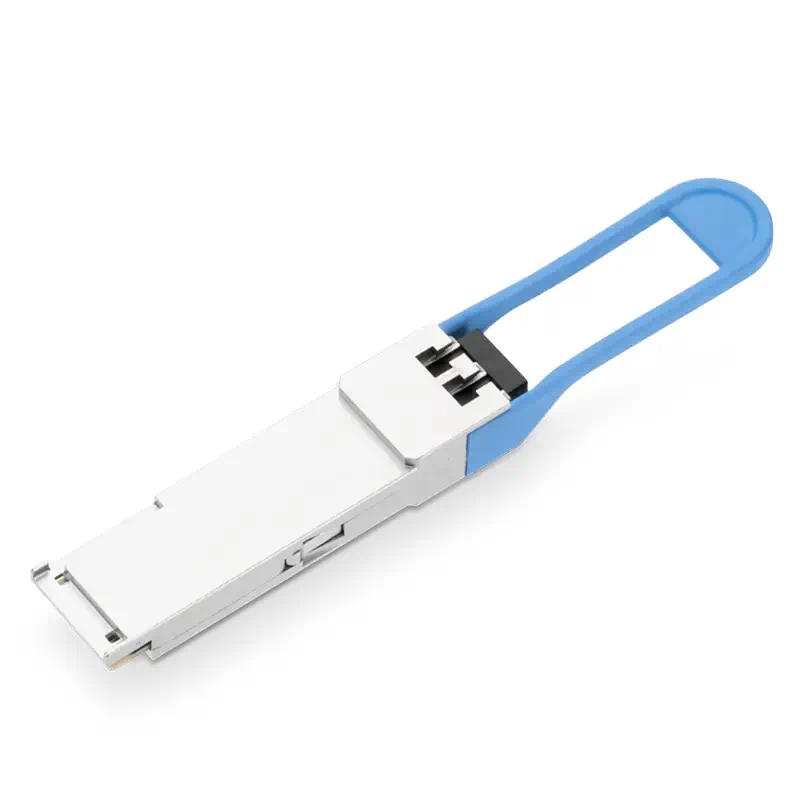
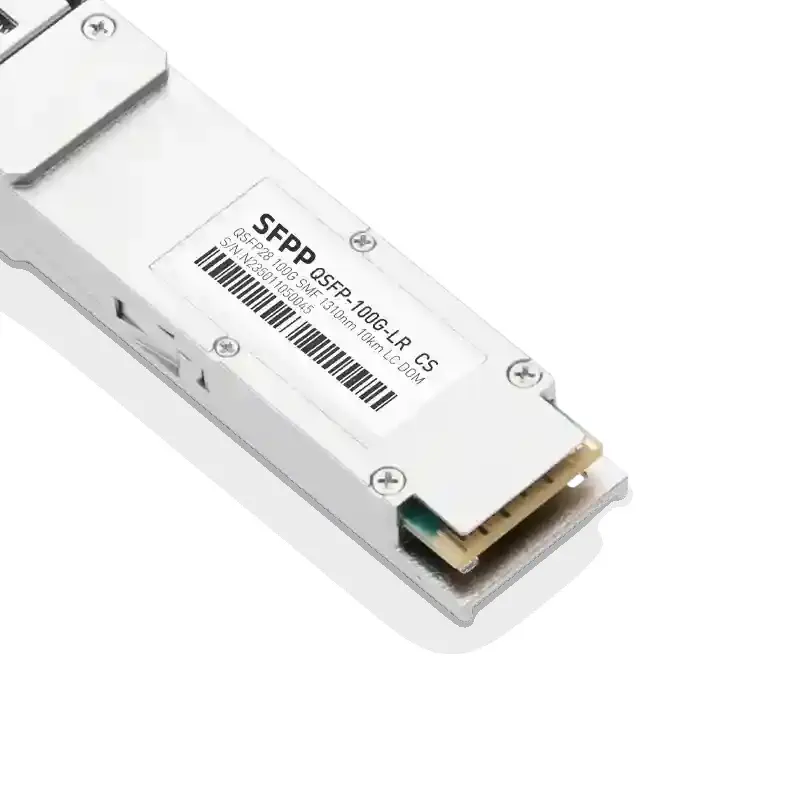
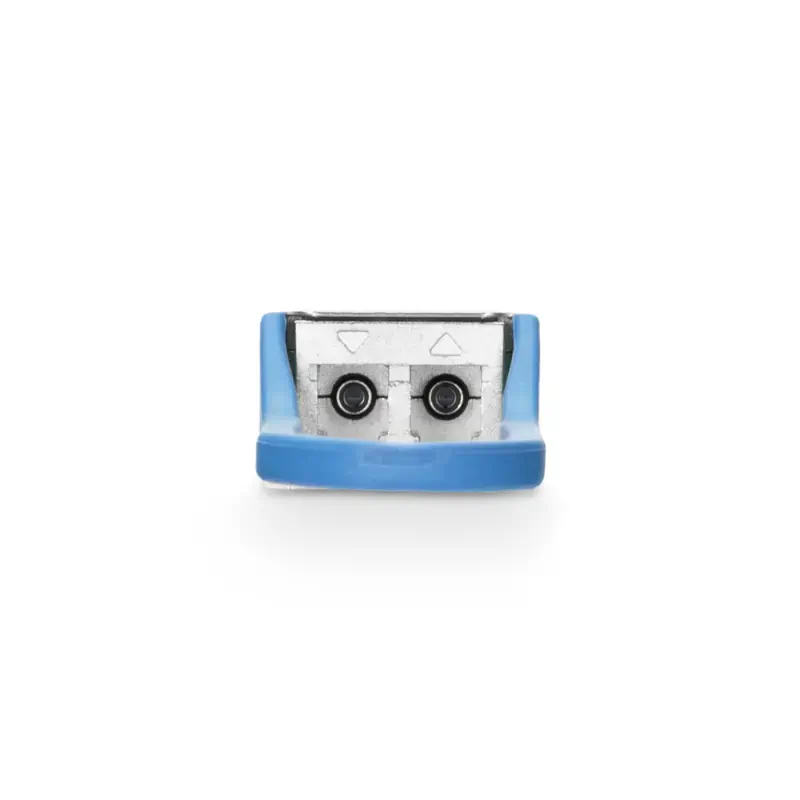
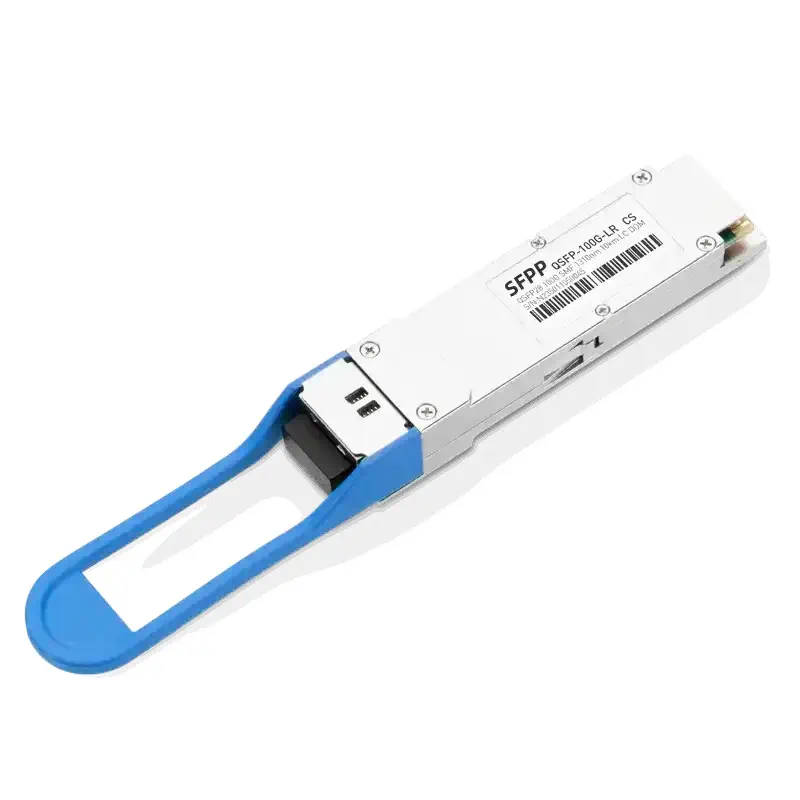
Generic Compatible 100GBASE-LR QSFP28 Single Lambda 4x25G NRZ 1310nm 10km SMF DOM LC Duplex Optical Transceiver Module

$299.00

SKU: 467A4E98D546

Product Highlights

  • Maximum Power Consumption: ≤4.5W.
  • Professional Compatibility Testing and Optical Parameter Test Reports Available.
  • Hot-Pluggable QSFP28 Form Factor; MSA and applicable IEEE standards compliance should be verified against the product datasheet.
  • Class 1 Laser Safety, RoHS Compliant, and Lead-Free.
  • DDM (Digital Diagnostic Monitoring) Supported for Monitoring Key Operating Parameters.
  • 30-Day Free Returns, 1-Year Free Replacement, 3-Year Warranty, and Lifetime After-Sales Technical Support.

QSFP-100G-LR 100G Single-Wavelength Optical Transceiver for Long-Reach Networks

The QSFP-100G-LR is a 100G QSFP28 optical transceiver designed for high-speed data transmission over single-mode fiber in data centers, enterprise networks, and telecommunications infrastructure. With a typical transmission reach of up to 10km, it provides a practical connectivity solution for extending 100Gb/s links between network switches, routers, and other compatible equipment.

Featuring a duplex LC optical interface, the QSFP-100G-LR is designed for use with compatible single-mode fiber cabling. Its hot-pluggable QSFP28 form factor supports convenient installation and replacement, helping simplify network upgrades and maintenance. With a maximum power consumption of 4.5W, the module is suitable for deployments where power efficiency and port density are important considerations.

The QSFP-100G-LR supports Digital Diagnostic Monitoring (DDM), enabling administrators to monitor supported operating parameters and assist with network troubleshooting. SFPPlaza also provides professional compatibility testing and optical parameter test reports to help customers evaluate module performance and interoperability.

For dependable operation, confirm the module’s wavelength, optical interface, transmission distance, host compatibility, and applicable standards against the product datasheet before deployment. SFPPlaza offers a 30-day free return policy, 1-year free replacement, a 3-year warranty, and lifetime after-sales technical support.

Specifications

Part Number QSFP-100G-LR Vendor Name SFPPlaza
Form Factor QSFP28 Max. Data Rate 100Gbps
Wavelength 1310nm Max. Cable Distance 10km
Connector Duplex LC Media SMF
Transmitter Type EML Receiver Type PIN
Max. Power Consumption ≤4.5W Protocols 100G Ethernet Compliant
DDM/DOM Supported Commercial Temperature Range 0 to 70°C (32 to 158°F)
Modulation (Electrical) 4×25.78Gb/s NRZ Modulation (Optical) 1x50Gbaud PAM4

Highlights

100% Compatibility Validated for Arista, NVIDIA, Cisco & Broadcom RoCE Networks

SFPPlaza optical transceivers, AOCs, and DACs undergo rigorous compatibility and interoperability testing with leading RoCE networking platforms, including Arista 7060XE7 and 7060X6 Series data center switches, NVIDIA Spectrum-4 SN5000 Series switches, Cisco N9100 and Nexus 9364E-SG2 Series switches, and Broadcom BCM57708 and BCM957608 NICs. Designed for high-performance RoCE and AI data center networks, our connectivity solutions deliver reliable high-speed data transmission, stable link performance, and seamless integration across demanding network environments.

NVIDIA/Mellanox (Ethernet) 920-9N42F-00RI-3C1, MSN4700-WS2FC, 900-9X81E-00EX-ST0, MCX75310AAS-NEAT, B3240, MCX623105AC-VDAT
Arista 7060XE7-128PE, 7060X6-64PE, 720R4-128PE, 7060DX5-32, 7050DX4-32S, 7280DR3A-54
Juniper QFX5240-64QD, QFX5700, QFX5220-32CD, QFX5120-48T, QFX5110-32Q
Cisco N9164E-NS4-O, N9364E-SG2-Q, Nexus 9364D-GX2A, Nexus 9504, 8501-SYS-MT, Nexus 3432D-S, N9K-X9400-16W(200G)
Broadcom P1800GO, BCM957608-P1400GDF00, BCM957508-N1200G
HUAWEI CE9875-64EO, CloudEngine 16804, CloudEngine 9865-4C, CloudEngine S6780-H4Z, CloudEngine 6885-48YS8CQ-T
H3C S9827-64EP, S9857-24DH8EP, S9855-32D, S9820-8C
Nokia 7220 IXR-H5-32D, 7220 IXR-H2

Questions & Answers

QSFP-100G-LR: Frequently Asked Questions

Q: What is the transmission distance of the QSFP-100G-LR?

A: The QSFP-100G-LR is designed for 100G transmission over single-mode fiber (SMF), with a typical reach of up to 10km when used with compatible duplex LC fiber cables. Actual reach depends on the module specifications, fiber quality, and link conditions.

Q: What is the maximum power consumption of the QSFP-100G-LR?

A: The QSFP-100G-LR has a maximum power consumption of 4.5W, making it suitable for 100G network deployments where power efficiency is an important consideration.

Q: What is the difference between the QSFP-100G-LR and QSFP-100G-LR4?

A: The key difference is the optical transmission architecture. A single-wavelength 100G LR module transmits the 100G optical signal over one wavelength, typically using PAM4 modulation. A conventional QSFP28 100G-LR4 module uses four optical wavelengths, each carrying approximately 25Gb/s using NRZ modulation. Both solutions can support long-reach 100G links over single-mode fiber, but their optical designs, interoperability requirements, and specifications differ. Always verify the exact module datasheet before selecting a replacement.

Q: How does single-wavelength 100G technology relate to 400G optical networking?

A: Single-wavelength 100G technology carries 100Gb/s over one optical wavelength. In a 400G system designed around four 100G optical lanes, this approach can help simplify the optical architecture compared with designs using eight 50G lanes. However, a QSFP-100G-LR is a 100G transceiver and does not automatically support 400G operation. Compatibility depends on the host interface, optical lane architecture, and system design.

Q: What are the advantages of single-wavelength 100G optical modules?

A: Single-wavelength 100G optical modules carry 100Gb/s over one optical wavelength, potentially reducing the number of optical wavelengths and simplifying the optical design compared with four-wavelength 25Gb/s solutions. Depending on the application, this architecture may help reduce component complexity and system costs. Actual power consumption, transmission distance, and interoperability depend on the module specifications and network equipment.
x