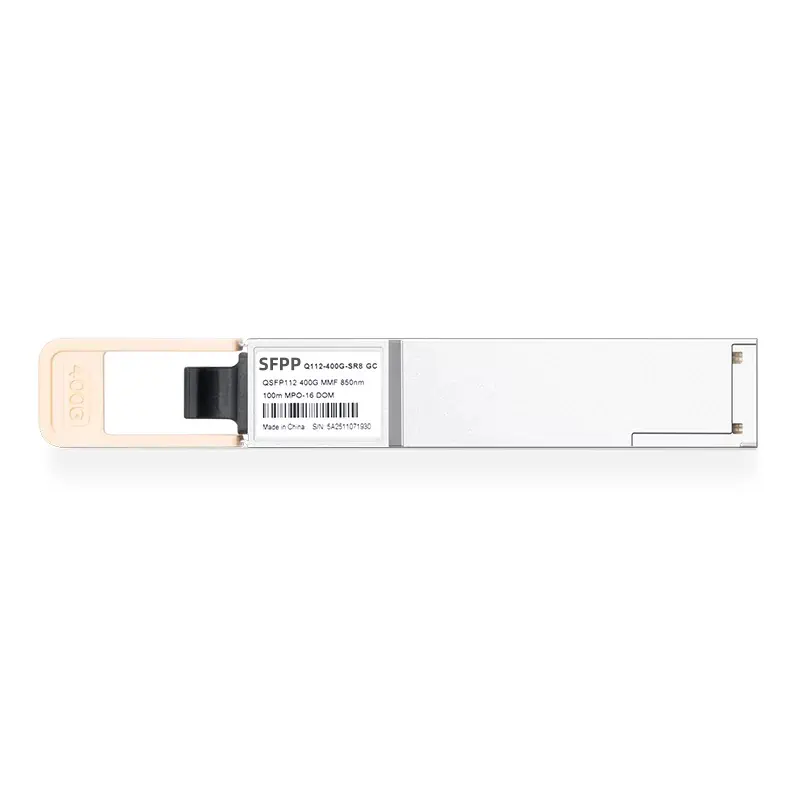
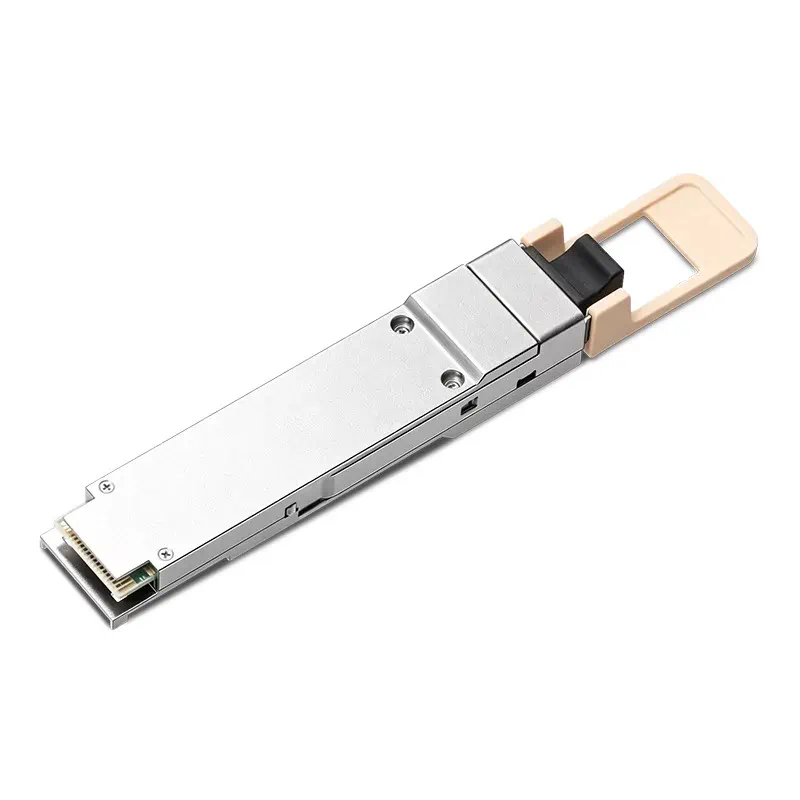
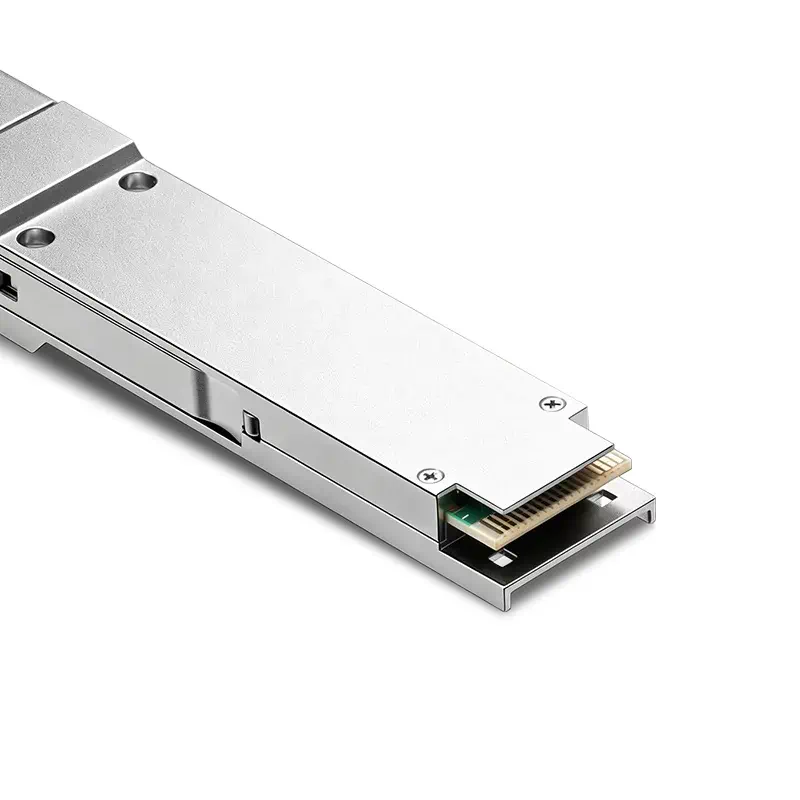
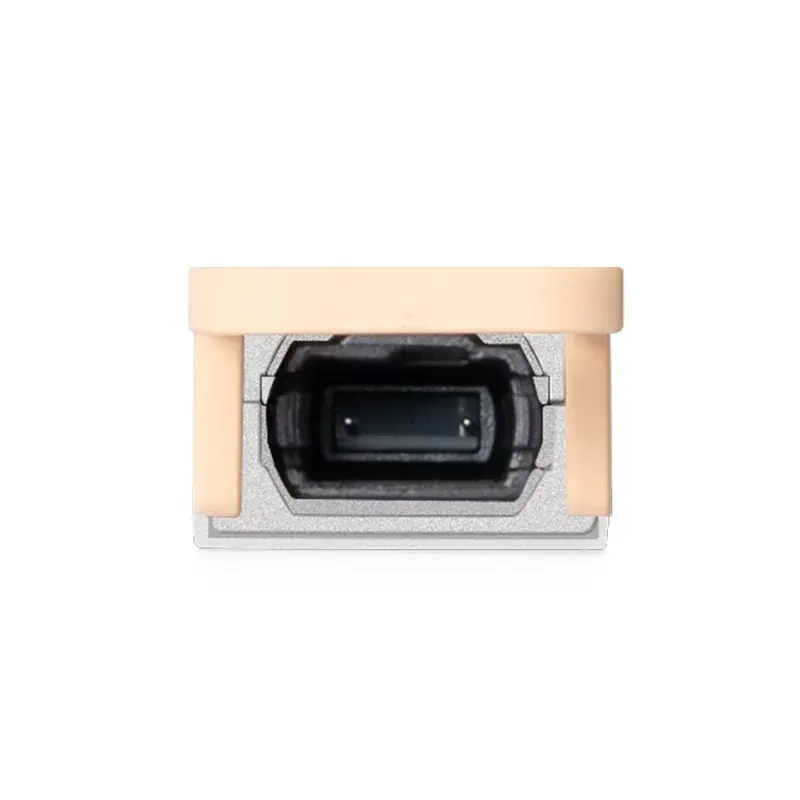
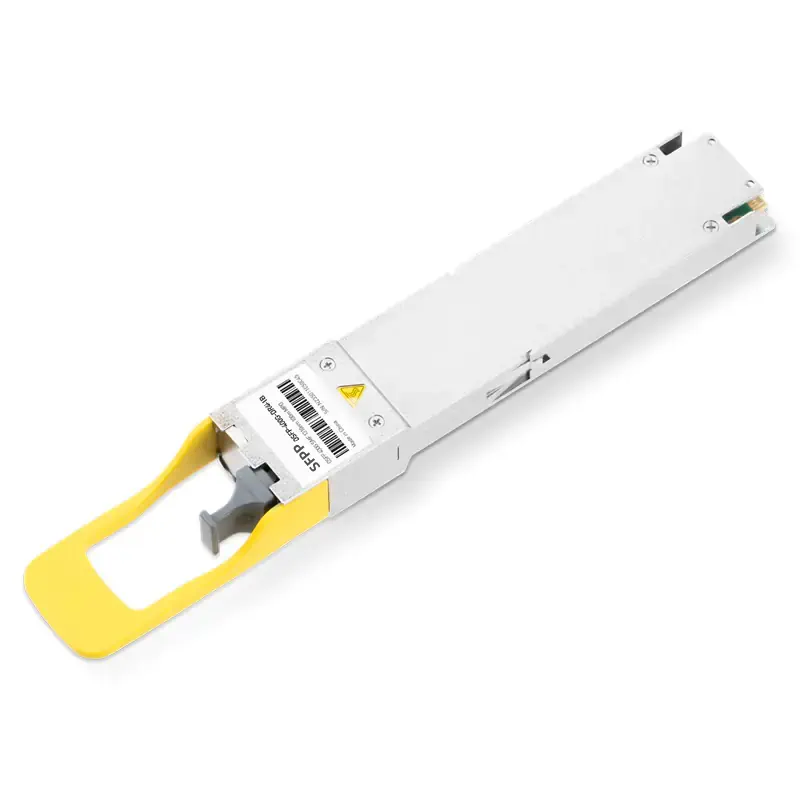
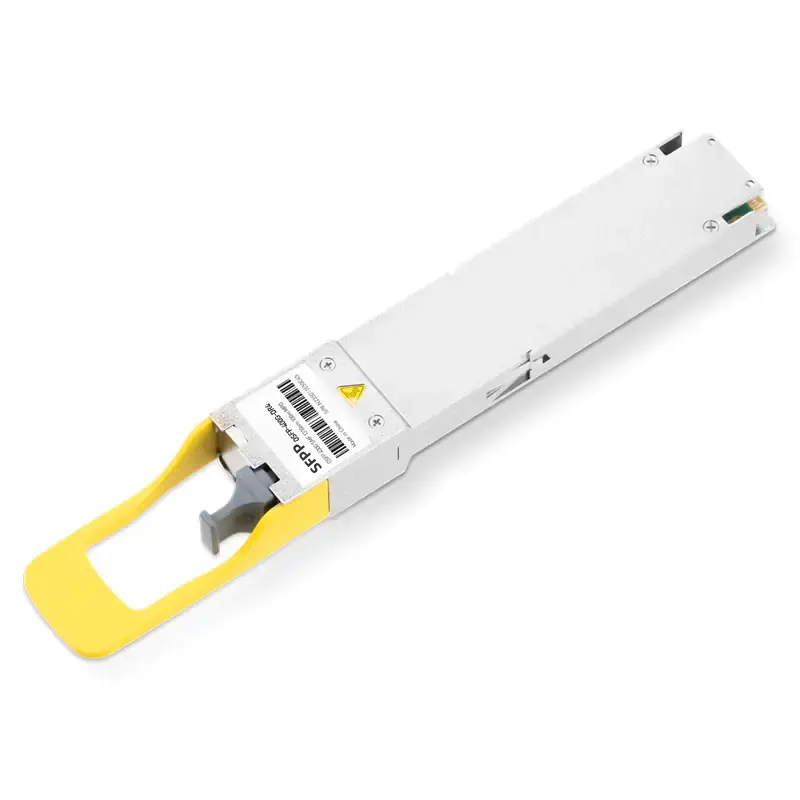
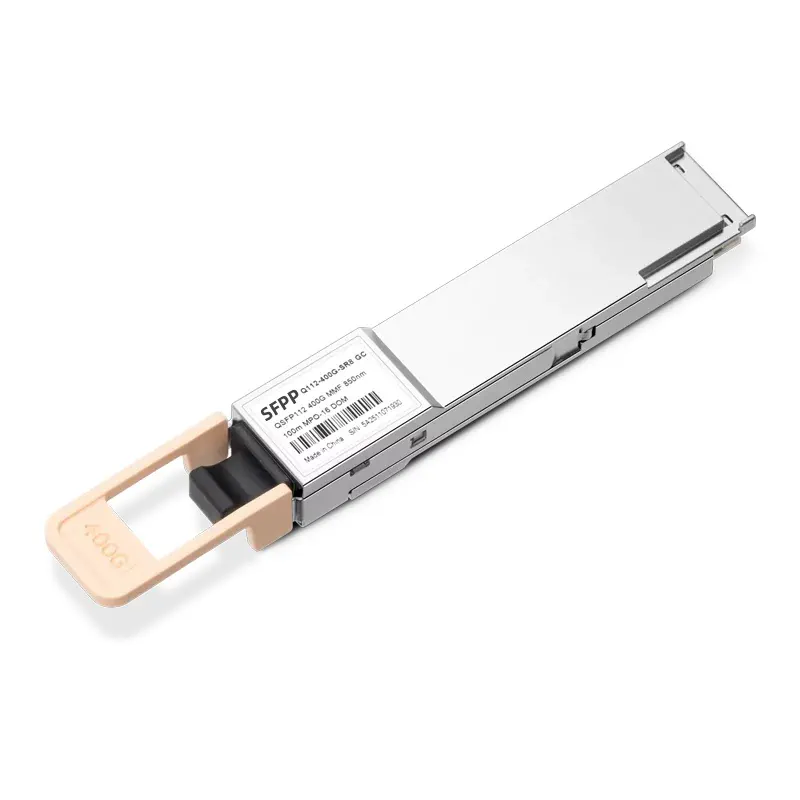
400GBASE-SR8 QSFP112 4x100G PAM4 850nm 100m MMF DOM MPO-16/APC Optical Transceiver Module

$399.00

SKU: bb9825828c64-2

Product Highlights

  • Professional Compatibility Testing and Detailed Parameter Test Reports Available.
  • Hot-Pluggable QSFP112 Form Factor, Compliant with QSFP112 MSA, IEEE 802.3db, and CMIS 4.0 Specifications.
  • Class 1 Laser Product, Compliant with RoHS Environmental Standards and Lead-Free Requirements.
  • Digital Diagnostic Monitoring (DDM) Supported for Real-Time Operating Parameter Monitoring.
  • Designed for AI Data Center (AIDC) Storage Networks and High-Bandwidth Data Center Connectivity.
  • Enhances Network Flexibility, Cost Efficiency, and Operational Reliability.
  • 30-Day Free Returns, 1-Year Free Replacement, 3-Year Warranty, and Lifetime After-Sales Technical Support.

Generic Compatible 400GBASE-SR8 QSFP112 4x100G PAM4 850nm 100m MMF DOM MPO-16/APC Optical Transceiver Module

The QSFP112-400G-SR8 optical transceiver is a high-performance 400G optical module designed for high-bandwidth Ethernet connectivity in AI data centers and next-generation data center networks. Featuring a QSFP112 form factor, it supports a 400Gbps aggregate data rate with four 100G PAM4 electrical lanes and eight 50G optical lanes. Operating at a nominal wavelength of 850nm, this 400G QSFP112 SR8 module supports transmission distances of up to 100 meters over OM4 multimode fiber using an MPO-16/APC connector. Designed for low power consumption, low latency, and high port density, it is suitable for high-performance computing (HPC), AI data center (AIDC), and data center network (DCN) applications. The module is designed to comply with IEEE 802.3db, QSFP112 MSA, and applicable CMIS specifications, supporting high-speed optical connectivity in compatible 400G network infrastructures.

The QSFP112-400G-SR8 optical transceiver can be deployed in compatible 400G Ethernet environments to connect QSFP112-equipped network interface cards (NICs) with QSFP-DD-based switches or other supported 400G network devices. Successful interoperability depends on the host port configuration, optical specifications, fiber polarity, and device compatibility. With its eight-lane multimode optical interface and high-density QSFP112 design, this module provides a practical connectivity solution for bandwidth-intensive AI workloads and scalable data center networks.

Specifications

Part Number QSFP112-400G-SR8 Vendor Name SFPPlaza
Form Factor QSFP112 Max. Data Rate 400Gbps
Wavelength 850nm Max. Cable Distance 100m
Connector MTP/MPO-16 APC Media MMF
Transmitter Type VCSEL Receiver Type PIN
Max. Power Consumption ≤10.5W Protocols 400G Ethernet Compliant
DDM/DOM Supported Commercial Temperature Range 0 to 70°C (32 to 158°F)
Modulation (Electrical) 4×106.25Gb/s PAM4 Modulation (Optical) 8×53.125Gb/s PAM4

Highlights

100% Compatibility Validated for Arista, NVIDIA, Cisco & Broadcom RoCE Networks

SFPPlaza optical transceivers, AOCs, and DACs undergo rigorous compatibility and interoperability testing with leading RoCE networking platforms, including Arista 7060XE7 and 7060X6 Series data center switches, NVIDIA Spectrum-4 SN5000 Series switches, Cisco N9100 and Nexus 9364E-SG2 Series switches, and Broadcom BCM57708 and BCM957608 NICs. Designed for high-performance RoCE and AI data center networks, our connectivity solutions deliver reliable high-speed data transmission, stable link performance, and seamless integration across demanding network environments.

NVIDIA/Mellanox (Ethernet) 920-9N42F-00RI-3C1, MSN4700-WS2FC, 900-9X81E-00EX-ST0, MCX75310AAS-NEAT, B3240, MCX623105AC-VDAT
Arista 7060XE7-128PE, 7060X6-64PE, 720R4-128PE, 7060DX5-32, 7050DX4-32S, 7280DR3A-54
Juniper QFX5240-64QD, QFX5700, QFX5220-32CD, QFX5120-48T, QFX5110-32Q
Cisco N9164E-NS4-O, N9364E-SG2-Q, Nexus 9364D-GX2A, Nexus 9504, 8501-SYS-MT, Nexus 3432D-S, N9K-X9400-16W(200G)
Broadcom P1800GO, BCM957608-P1400GDF00, BCM957508-N1200G
HUAWEI CE9875-64EO, CloudEngine 16804, CloudEngine 9865-4C, CloudEngine S6780-H4Z, CloudEngine 6885-48YS8CQ-T
H3C S9827-64EP, S9857-24DH8EP, S9855-32D, S9820-8C
Nokia 7220 IXR-H5-32D, 7220 IXR-H2

Questions & Answers

QSFP112-400G-SR8: Frequently Asked Questions

Q: What modulation scheme does the QSFP112-400G-SR8 optical transceiver use?

A: The QSFP112-400G-SR8 optical transceiver supports eight 50Gbps PAM4 optical lanes, delivering an aggregate data rate of 400Gbps. “SR” stands for Short Reach, indicating short-distance optical transmission, while “8” refers to the eight optical lanes used by the module.

Q: What are the connectivity options for the 400G QSFP112 SR8 transceiver?

A: The 400G QSFP112 SR8 supports direct 400G connections between compatible SR8 optical transceivers using an appropriate multimode fiber link. For breakout applications, a compatible 400G SR8 interface can potentially connect to two 200G QSFP56 SR4 transceivers using a suitable MPO-16 to 2xMPO-8 multimode breakout harness. The host ports, optical lane mapping, connector polarity, and breakout configuration must all be supported by the connected equipment.

Q: Can QSFP112-400G-SR4 and QSFP112-400G-SR8 optical transceivers be interconnected?

A: Not directly in a standard optical link configuration. The SR4 and SR8 modules use different optical lane configurations and connector interfaces. A typical 400G SR4 module uses an MPO-12 connector with four 100G optical lanes, whereas a 400G SR8 module uses an MPO-16 connector with eight 50G optical lanes. Direct interconnection is therefore not supported by default. Any alternative connection would require specifically compatible optical interfaces and a supported lane-mapping solution.

Q: Can a QSFP112-400G-SR8 module interoperate with an OSFP-400G-SR8 or QSFP-DD-400G-SR8 module?

A: Yes, interoperability is possible when both modules support compatible 400G SR8 optical specifications, including wavelength, optical lane configuration, and transmission requirements. QSFP112, OSFP, and QSFP-DD identify different module form factors, so each transceiver must match its host port. A suitable MPO-16 multimode fiber assembly with the correct connector type and polarity is also required. Verify the specifications of both modules and host devices before deployment.
x